We, the residents around Waldemarbrücke, demand safe streets, less noise, and clean air.
Our residential streets Waldemarstraße, Leuschner– and Legiendamm with cobblestones are used by cars and trucks as a shortcut between East and West. Motor vehicle traffic belongs on main roads – not in residential areas!
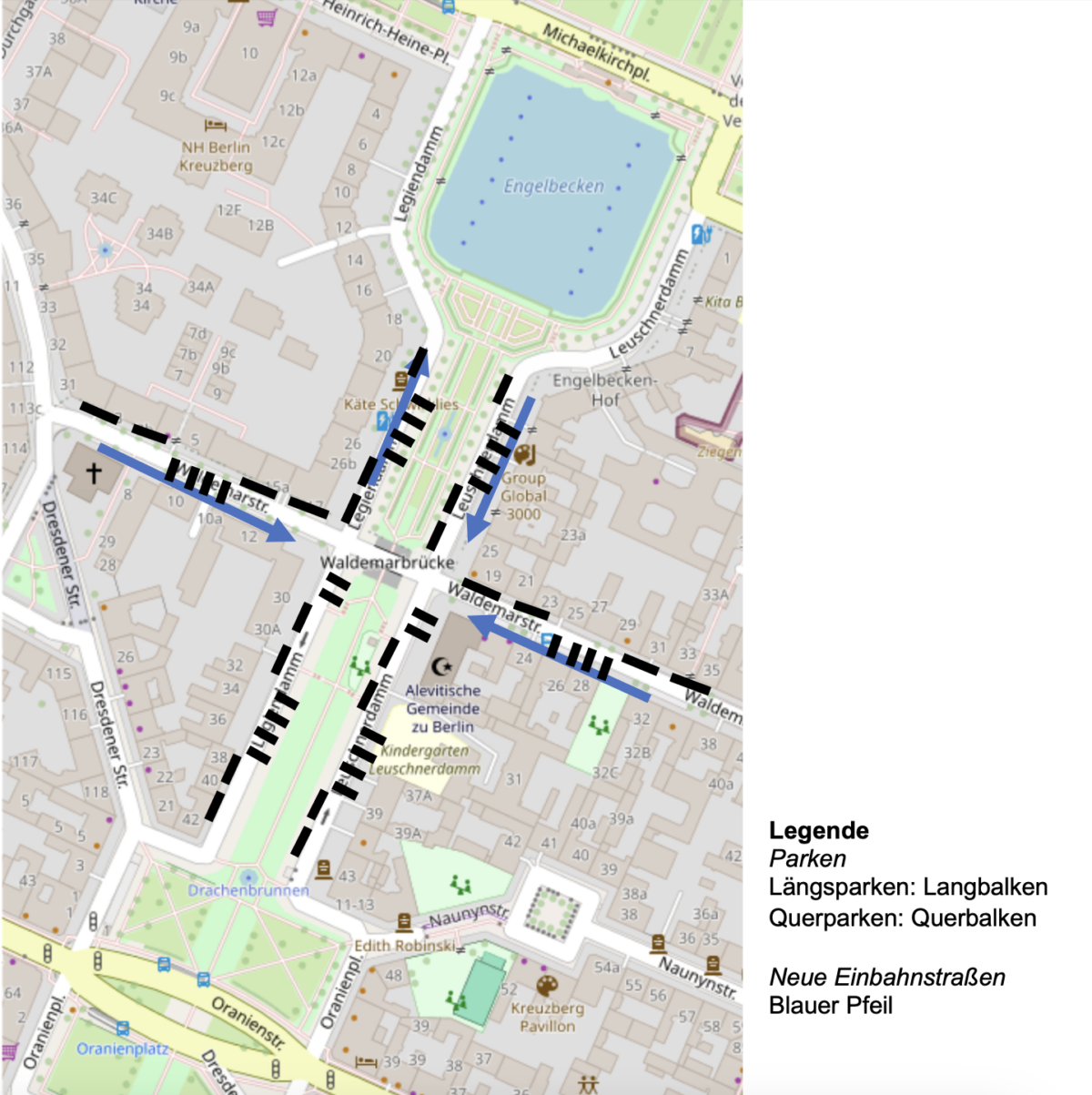
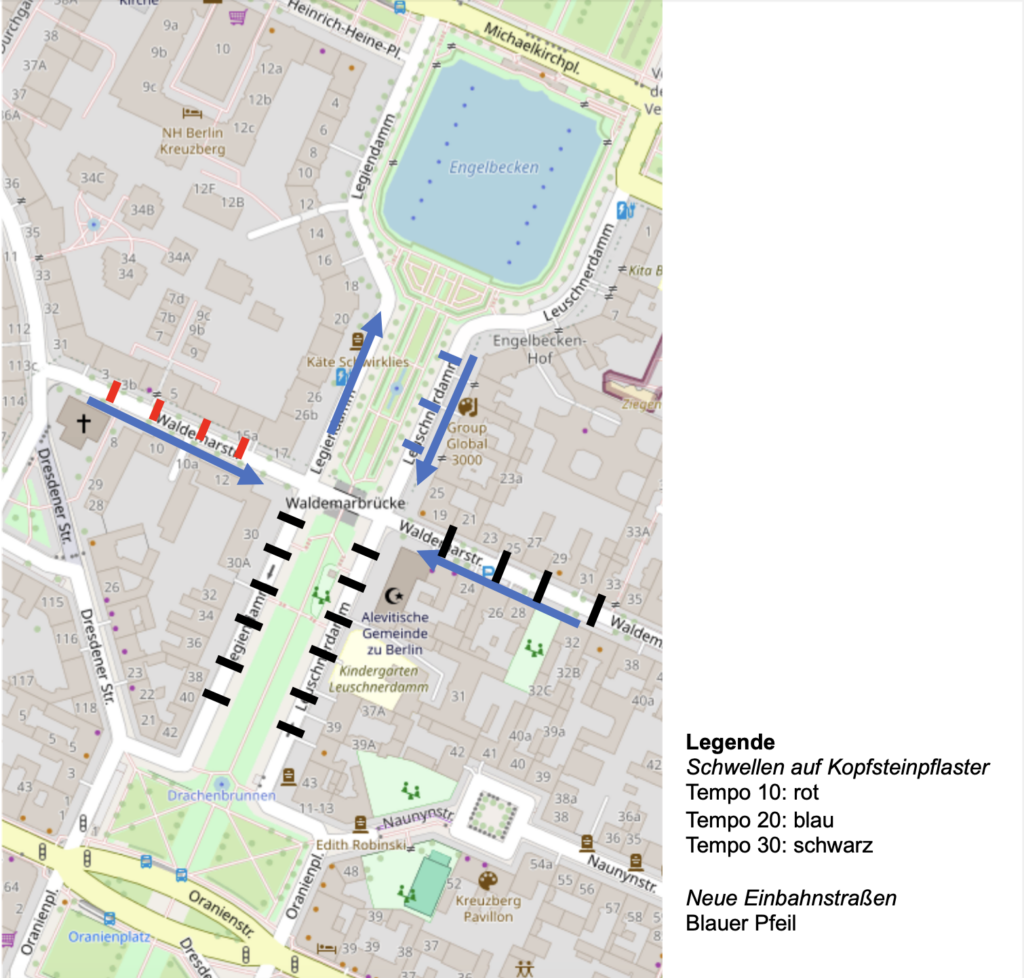
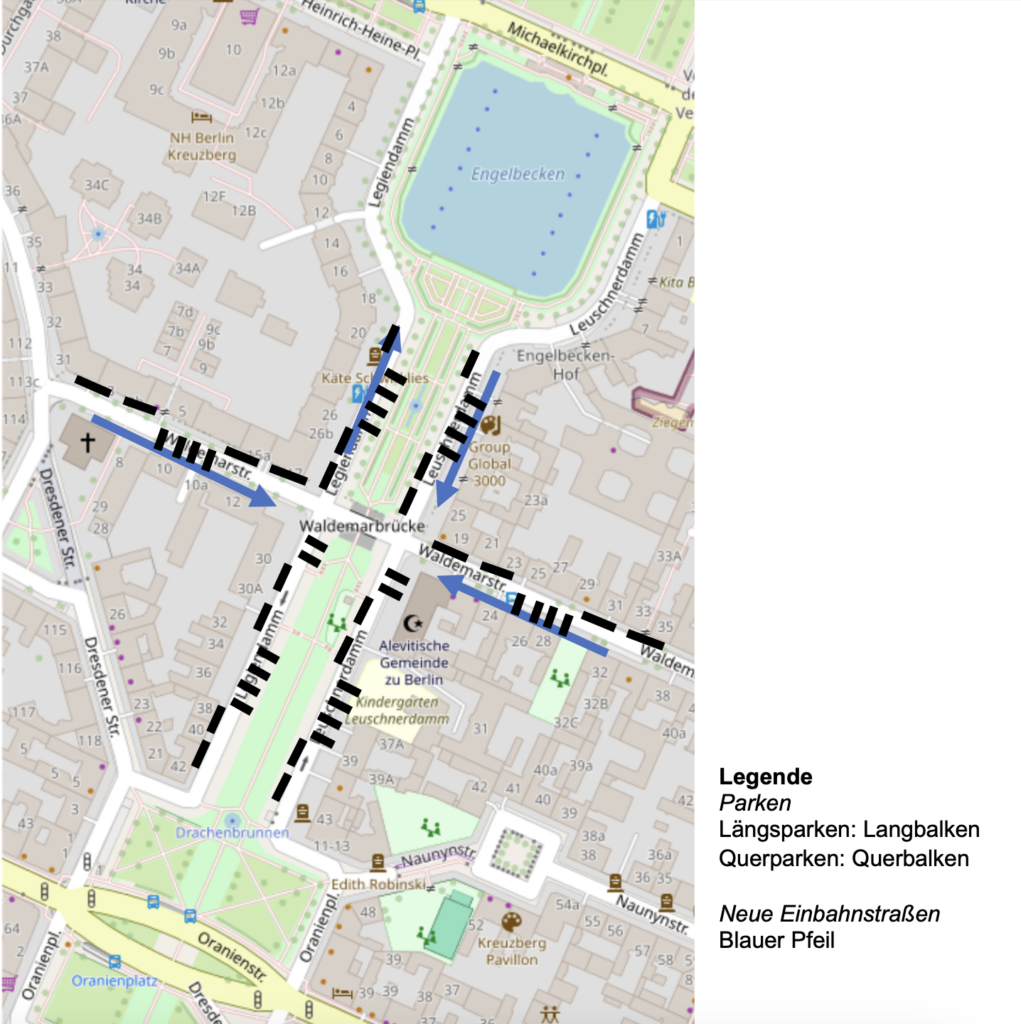
We are active and demand that the district offices of Friedrichshain-Kreuzberg and Mitte immediately build the diagonal barriers approved by the BVV FK or install speed-appropriate bumps, alternating perpendicular and parallel parking, and opposing one-way streets. According to the BVV’s priority list, the diagonal barriers won’t come for another 10-12 years.
Join us: subscribe to the newsletter waldebruecke@posteo.de, attend our meetings, inform the public, write to authorities, inform the press, use social media, contact politicians
Berlin-Mitte district will close a speeding route around Michaelkirche in June 2026
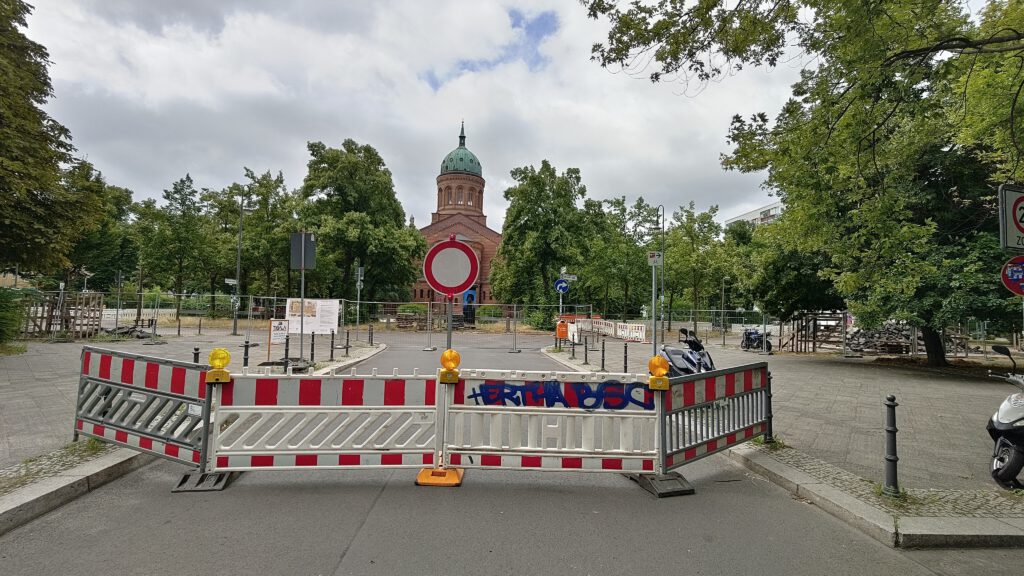
In June 2026, the district of Mitte closed Michaelkirchstrasse. We are pleased. But that won’t be enough. The shortcut toward Schillingbrücke remains attractive. Motor vehicles are now driving through Melchiorstraße, which is only open to bicycles and residents. We expect opposing one-way streets, speed-appropriate bumps, and alternating perpendicular and parallel parking on the parts of Leuschner- and Legiendamm that belong to the district of Mitte. The one-way streets would be a start!
The district of Kreuzberg-Friedrichshain is only planning “smaller measures for speed calming and improving the crossing situation in Waldemarstrasse” and refers to the Mitte district. That will certainly not help us!
We are sending you our urgent request and ask for swift implementation. Please also let us know what you are planning, and when.
Kind regards
T. Albrecht, spokesperson
Who we are
As residents on Leuschnerdamm, Legiendamm and Waldemarstraße (North), on the edges of Berlin Kreuzberg and Mitte, we are affected here in the neighbourhood by fast, loud and dangerous through traffic over Waldemarstraße, Leuschnerdamm and Legiendamm on cobblestones. We have been working for many years to change this. Numerous local residents support us in our goal of sustainably improving quality of life here on the ground.
Through traffic by motor vehicles creates noise, danger for us and children, and fine particulate pollution.
Motor vehicles avoid the main roads and drive from
– Oranienplatz via Leuschnerdamm towards Bethaniendamm and from
– Engeldamm onto Legiendamm to Oranienplatz. From
– Michaelkirchplatz onto Legiendamm
– Illegally from Leuschnerdamm via Michaelkirchplatz onto Michaelkirchstraße.
– From Sebastianstraße and Luckauer Straße via Waldemarstraße onto Leuschnerdamm or further along Waldemarstraße.
We assume that the closure at Michaelkirchplatz announced for Q2 2026 will hardly reduce the traffic flow, but will shift it to Engeldamm and Bethaniendamm.
In our residential area, we endure a rush hour on cobblestones every morning and evening.
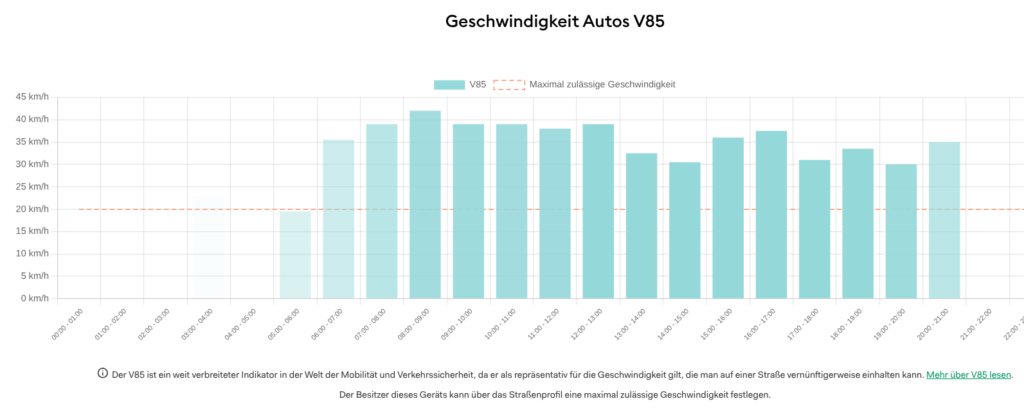
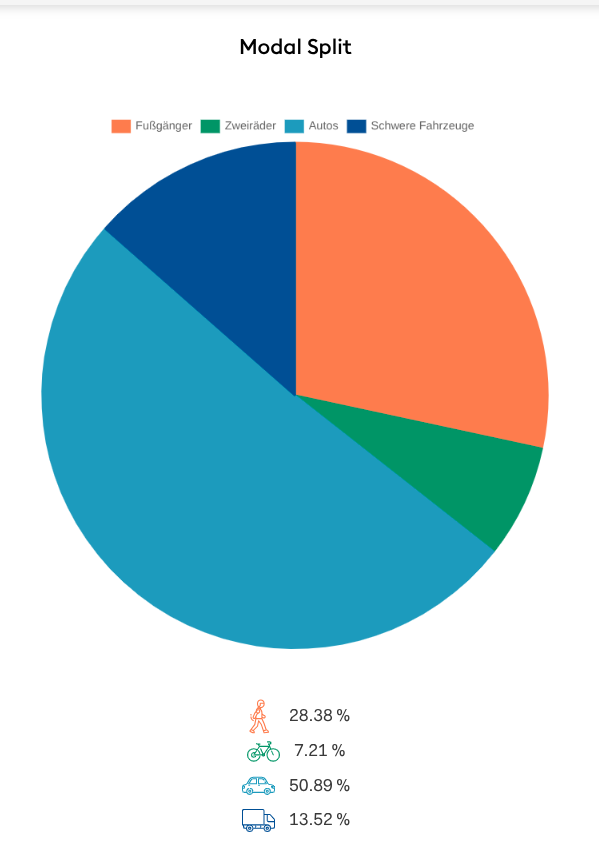
Our measurements show (see below): Motor vehicles significantly and regularly exceed the speed limits of 10 (Waldemarstr. West), 20 (Leuschnerdamm and Legiendamm North) and 30 km/h (Leuschnerdamm and Legiendamm South). Almost 65% of road users on the cobblestones are loud motor vehicles, including an even louder 15.52% trucks.
We have contacted the authorities several times. Temporary speed cameras and speed displays have no effect.
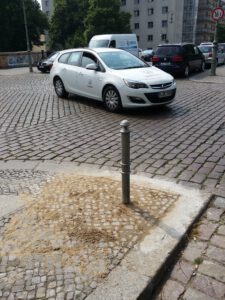
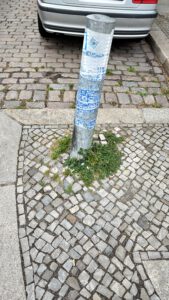
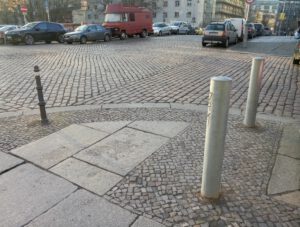
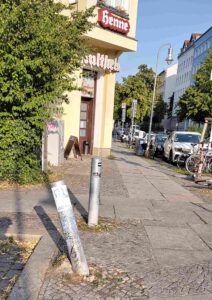
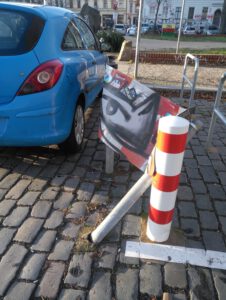
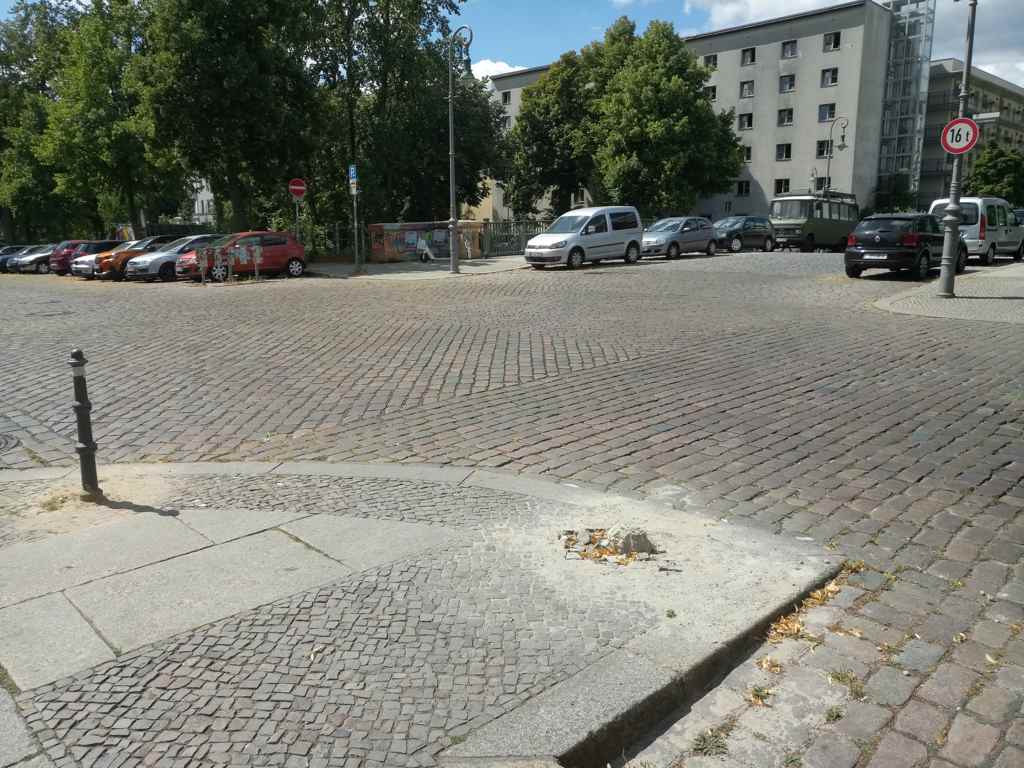
The bollards in front of Wirtshaus Henne (corner of Leuschnerdamm / Waldemarstraße) are often hit by motor vehicles turning too fast from Waldemarstraße into Leuschnerdamm. The administration has already replaced the historic bollards with heavy steel pipes. The marker posts at the corner of Leuschnerdamm at Oranienplatz are also damaged.
At the Legiendamm/Waldemarstraße intersection, motor vehicles coming from Waldemarstraße towards the bridge cause accidents due to excessive speed.
Except for Legiendamm North, all streets are paved with cobblestones that generate noise.
As residents, we do not want to wait any longer until the agreed diagonal closures on the Kreuzberg side are implemented as part of a Kiezblock to the left and right of the Waldemar Bridge. With the capacities of the Friedrichshain-Kreuzberg district office, the current plan is estimated to take another 12 years as of 2026.
YouTube video shows traffic that is too fast and too loud from Legiendamm (Mitte) onto Waldemarstraße (North) in the 10 km/h zone: https://tinyurl.com/3d3ebc9j
YouTube video shows traffic that is too fast and too loud from Dresdner Str. onto Legiendamm (Mitte) in the 10 km/h zone https://tinyurl.com/twezfkp2
Our demands
We want through traffic to be prevented in the residential area of Waldemarstraße from Dresdner Straße to Adalbertstraße, and on Leuschnerdamm and Legiendamm from Oranienplatz to Engelbecken, using measures that can be implemented quickly, and for the existing speed limits to be enforced.
We propose speed-appropriate humps, alternating perpendicular and parallel parking, and opposing one-way streets to the district offices of Friedrichshain-Kreuzberg and Mitte. (District Office Mitte is responsible for Leuschner- and Legiendamm north of Waldemar Bridge; other streets mentioned here are District Office FK)
We prepared maps of our area with the proposals for this, see below.
Candidates for the House of Representatives (AGH): We want them, as members of the Senate, to support the district offices with staff and resources to implement the planned Kiezblocks. We are holding talks.
Candidates for the district council (BVV): We want them to advocate for solving our problem in “their” district office. We are holding talks.
We propose speed-appropriate humps or alternating perpendicular and parallel parking, each supplemented with opposing one-way streets, to the district offices of Friedrichshain-Kreuzberg and Mitte.
Setting up speed-appropriate humps and opposing one-way streets in Kreuzberg and Mitte (north of Waldemar Bridge)Setting up alternating perpendicular and parallel parking and opposing one-way streets in Kreuzberg and Mitte (north of Waldemar Bridge)
Reasons
– Our residential streets are losing their quality of life due to fast-moving through traffic.
– Road noise penetrates our living and sleeping rooms on the street side.
– We have daycare centres in the area. Their children have to cross the dangerous streets:
Kindergärten City, Leuschnerdamm 33, 10999 Berlin,
Kita Bethaniendamm, Bethaniendamm 63/65, 10999 Berlin
Kita Sankt Michael, Dresdener Str. 29, 10999 Berlin
Kinderhaus Waldemar, Waldemarstraße 57, 10997 Berlin
Kita Adalbertstr. 87&88 (Kotti e.V.)
– Special-needs supported living for children and young people, Michaelkirchplatz 3, 10179 Berlin
– Music school Friedrichshain-Kreuzberg at Mariannenplatz 2, 10997 Berlin.
– Educational support facility of the Pestalozzi-Fröbel-Haus at Mariannenplatz 3
– A large facility for homeless people with addiction issues SIEFOS at the corner of Waldemarstraße/Legiendamm
– School routes to
City Primary School, Sebastianstraße 57, 10179 Berlin
Luisenstadt Primary School, Adalbertstraße 53, 10179 Berlin
kinderlabor curioso, Waldemarstraße 57, 10997 Berlin
Heinrich Zille Primary School, Waldemarstr. 118
Nürtingen Primary School, 10997 Berlin
Freie Schule Kreuzberg, Wrangelstr. 128 10997 Berlin
Refik Veseli School, Wienerstr. 64-65, 10999 Berlin
– Conflict between street noise and relaxation in the “Luisenstädtischer Kanal” park
We document our problem with ongoing measurements using a Telraam device at Leuschnerdamm 19. The results can be viewed online: https://telraam.net/home//9000010774
The 20 km/h speed limit on Leuschnerdamm is constantly exceeded on the cobblestones, except between 5 and 6 AM.
Almost 65% of the traffic on the cobblestones consists of motor vehicles, 16% of which are trucks, often with rattling loads.
Waldemarstraße, Legien- and Leuschnerdamm on the border of the Kreuzberg and Mitte districts, with their cobblestone streets, are being used by north-south transit traffic at excessive speeds. After reunification, the city grew together with a scar that motor vehicle traffic uses as a shortcut.
Through traffic flows from-
– Oranienplatz via Leuschnerdamm towards Bethaniendamm, – Engeldamm onto Legiendamm to Oranienplatz
– Michaelkirchplatz onto Legiendamm
– Sebastian- and Luckauerstrasse via Waldemarstrasse onto Leuschnerdamm or further along Waldemarstrasse.
Drivers ignore the 10, 20, and 30 speed limit signs. This creates noise, danger, and fine dust for us residents! Crashes frequently occur at intersections. The bollards, for example, in front of the Henne Tavern and at Oranienplatz are regularly knocked over due to excessive speed. Reports to the police via the online portal achieve little. Even if they do measure, traffic is back to being too fast after three days.
We are residents with windows facing cobblestone streets, with children whose school routes, we have three daycare centers in the neighborhood and the social project for people with disabilities.
As residents, we want safety, peace and quiet, quality of life, and climate adaptation!
2026: As residents, we no longer want to wait for the approved diagonal filters to be implemented on the Kreuzberg side as part of a Kiezblock to the left and right of the Waldemar Bridge. With the capacities of the Friedrichshain-Kreuzberg district office, the current plan for diagonal filters in 2026 will still take at least 10 years.
Hit bollards indicate speeding traffic
The historic bollard from “Henne” replaced in May 2016New leaning bollard on Leuschnerdamm in front of Wirtshaus Henne hit by fast-turning drivers. 7.5.2026Bollards in front of the “Henne” tavern. After the historic bollards on the right were knocked over multiple times, the district office installed these massive ones. The one on the left has already clearly been hit again.Bollards in front of “Henne” Inn hit again on July 19, 2026. Damage reported to BA FK. Photo TABollard and traffic bollard, Leuschnerdamm corner Oranienplatz, hit by a vehicle, photo from 1/9/2023, TA
Berlin’s Senate, previously led by the CDU, does not want any Kiezblocks and is giving the districts too little money for bollards and staff to install them.
Already after the fall of the Wall, we founded a Traffic Working Group in the Luisenstadt Citizens’ Association and demanded speed bumps on Leuschnerdamm and Legiendamm.
2025: Residents of Waldemarstrasse are fighting back with a petition.
Now, before the election on September 20, 2026, for the Berlin House of Representatives, we interviewed candidates about their support for Kiezblocks. We also borrow devices that measure noise, speed, and the number of motor vehicles, e.g., Telraam, to document our problem! Our first device at Leuschnerdamm 19 has shown since April 23, 2026, that on the cobblestones almost half of the motor vehicles drive too fast and that motor vehicles make up 72% of the main traffic ahead of pedestrians and cyclists.
We founded a residents’ initiative “Around the Waldebrücke Speeders Out!” on Fri. 6.3.2026. If you’re interested in joining, please contact: waldebruecke[at]posteo[dot]de
We demand
– One-way streets against traffic from the Mitte district office
– Speed bumps or alternatively
– Alternating perpendicular and parallel parking, and the
– Closure of Michael-Kirchstrasse behind St. Michael’s Church by the Mitte district office!
For this, we need activities from the Friedrichshain-Kreuzberg District Office for Leuschnerdamm and Legiendamm from Oranienplatz to Waldemarbrücke and for Waldemarstrasse, and from the Mitte District Office for Leuschnerdamm and Legiendamm from Waldemarbrücke to Annenstrasse!
Stop the street racing rally!
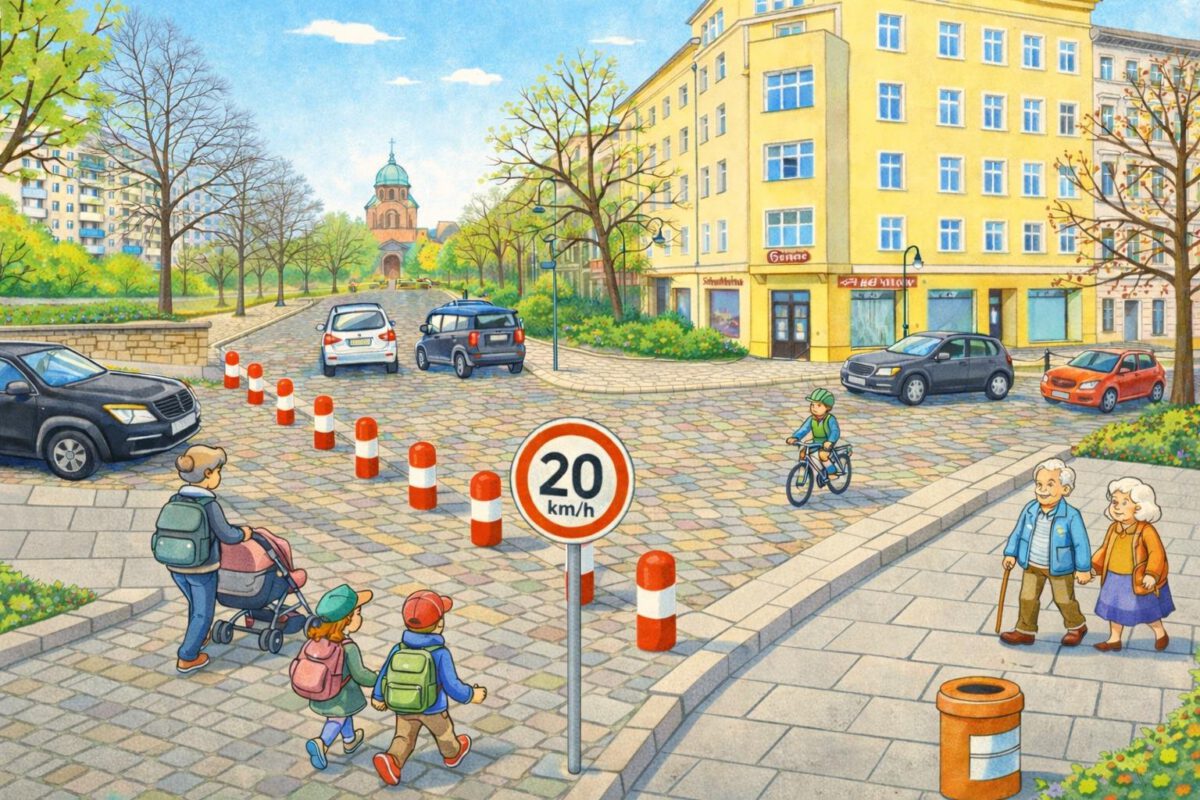
This is how AI imagines our future
Diagonal barrier, Waldemarstrasse corner Leuschnerdamm, AI-generated with OpenAI
Gas pipe. I switched my stove from gas to electricity, away from fossil natural gas to electricity, which increasingly comes from renewable sources. (C) T.A.
We can increase the ecological handprint by influencing the environment and society to protect resources more, e.g:
in target groups: Neighbors, friends, public, colleagues, company,
association, politics
Vote for the Climate Protection Party
Donations to Greenpeace, ADFC, Klimaschutz im Bundestag e.V.
Ecol. Start or support initiatives in the home, in the neighborhood, among acquaintances
Set up a sustainability working group in the association, at the workplace
As an artist ecol. Working on and exhibiting themes in the plant
Demonstrate: Climate demo, “We’re fed up”
Go to an ethical bank. Current accounts: GLS Bank, Ethik Bank, Triodos Bank, Pax Bank, Umwelt Bank for loans, call money accounts, savings contracts. Invest money sustainably
Formulate political demands, join for-future-buendnis.de
Writing letters to the editor, members of parliament
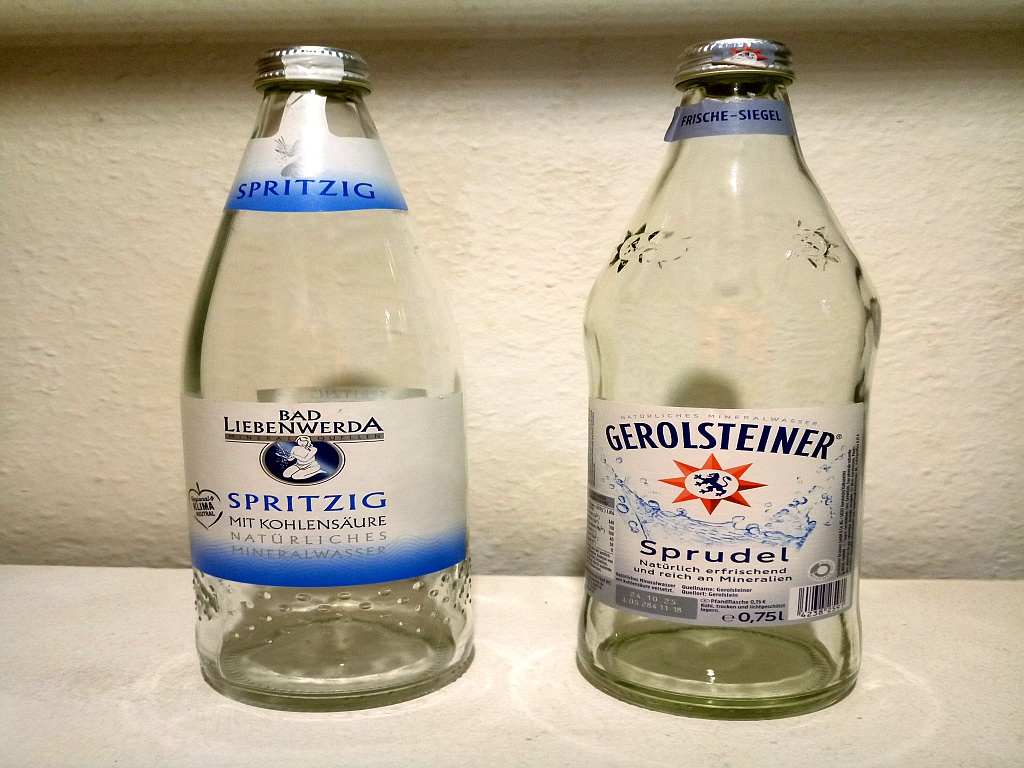
Mineral water transported by truck and fossil fuels, often in plastic bottles, often brought in from afar, even though it comes conveniently from the tap: highway water.
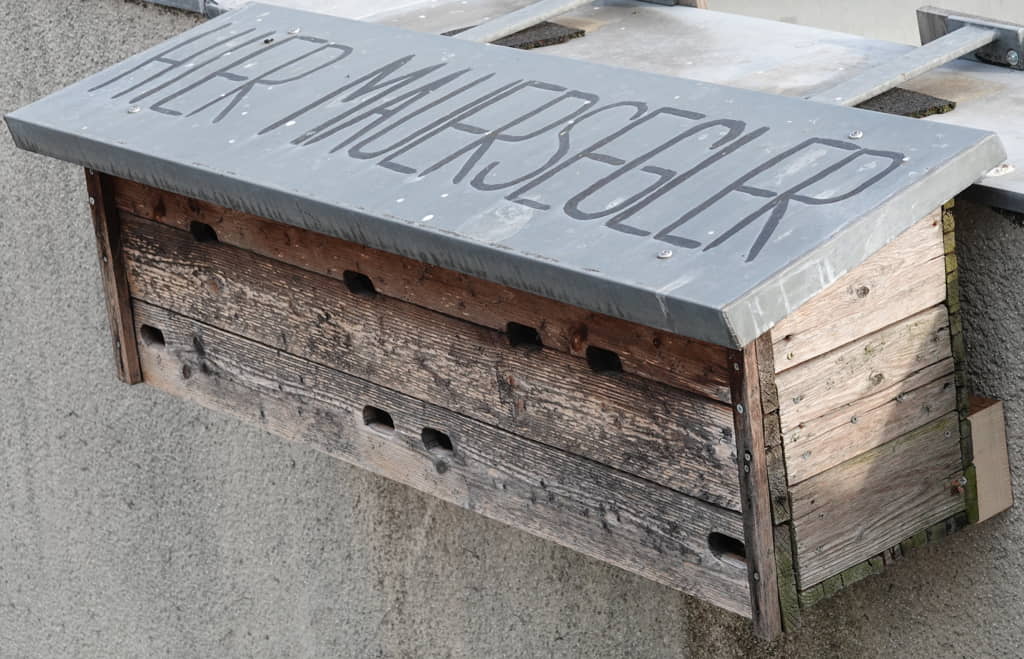
Swift nest box empty for first time in 2023 after many years of whistling and nesting in summer. Is the reason the insect mortality caused by agricultural poisons? No, this year they came again, but later.
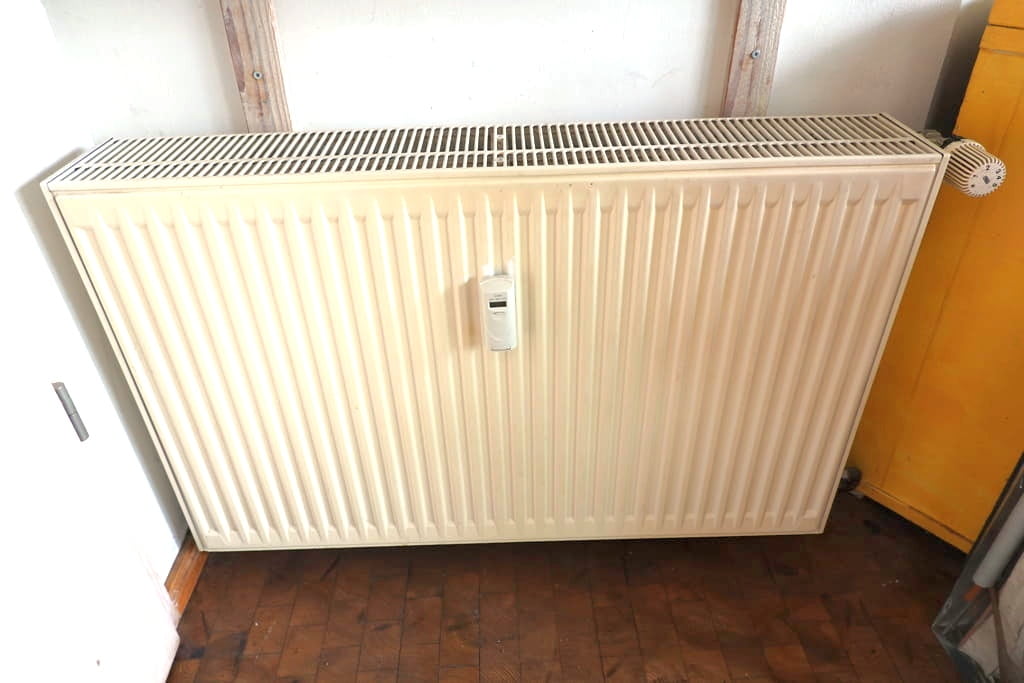
Is the radiator suitable for a heat pump? That depends on the flow temperature, the design of the radiator, the heat output, the insulation of the room and the insulation of the windows. This is a panel radiator, which is good. It is best to do a test at frost with a flow temperature of 55°C.
Bicycle and pedestrian path between Dresdnerstr. and Reichenbergerstr. at the Kottbusser Gate
The bicycle and pedestrian path between Dresdnerstr. and Reichenbergerstr. at Kottbusser Tor has been parked over for years and blocked by bollards and barriers. It is located on private property with public right of way. The traffic does not interest the house management, the right of way does not interest the district office. My talks with the property management at that time as an ADFC member were unsuccessful.
Today my mails with the district office were quite unsatisfactory. “If you drive across private property, that’s their problem”.
Until I discovered this project from infravelo that aims to solve exactly my problem:
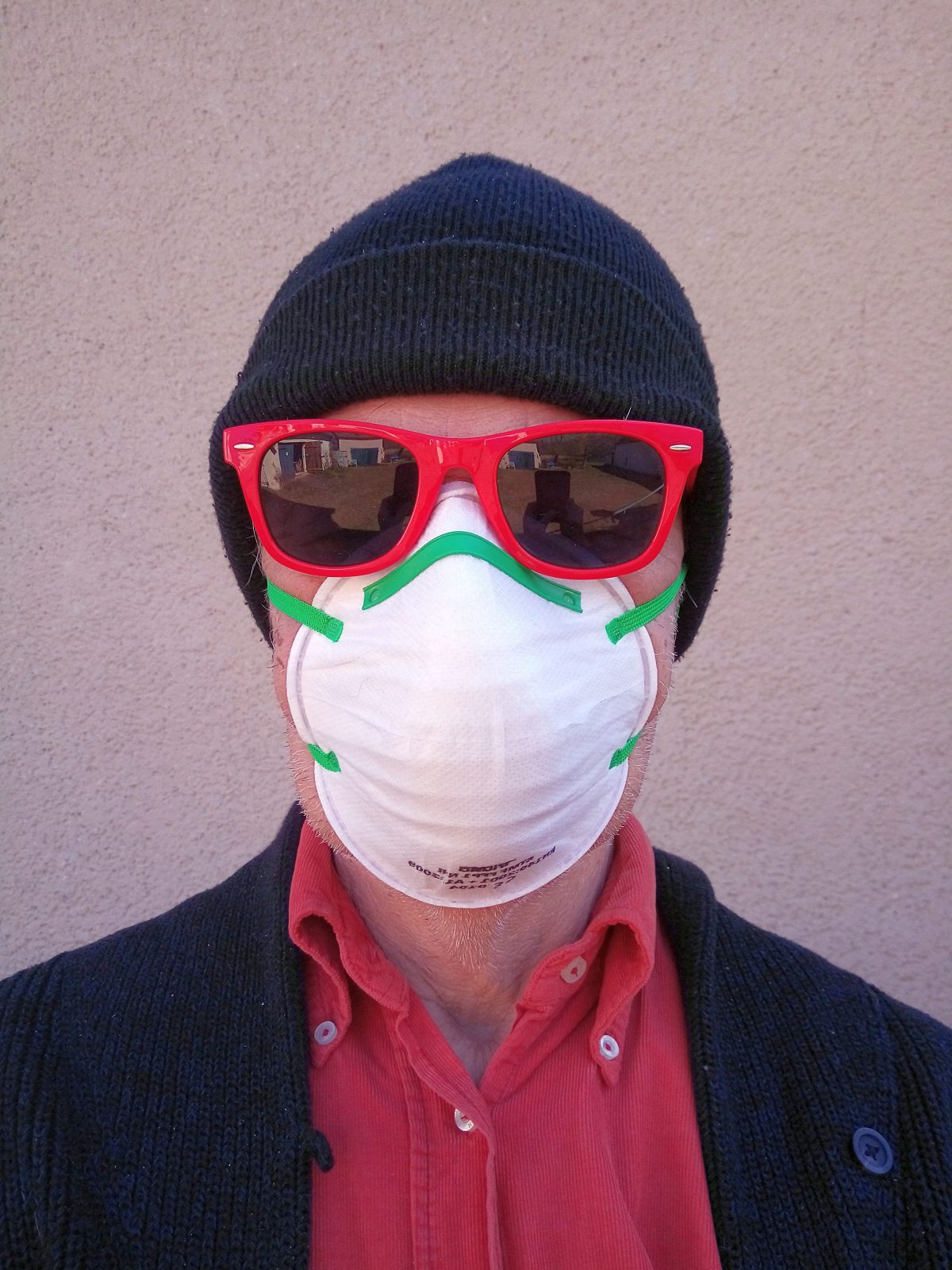
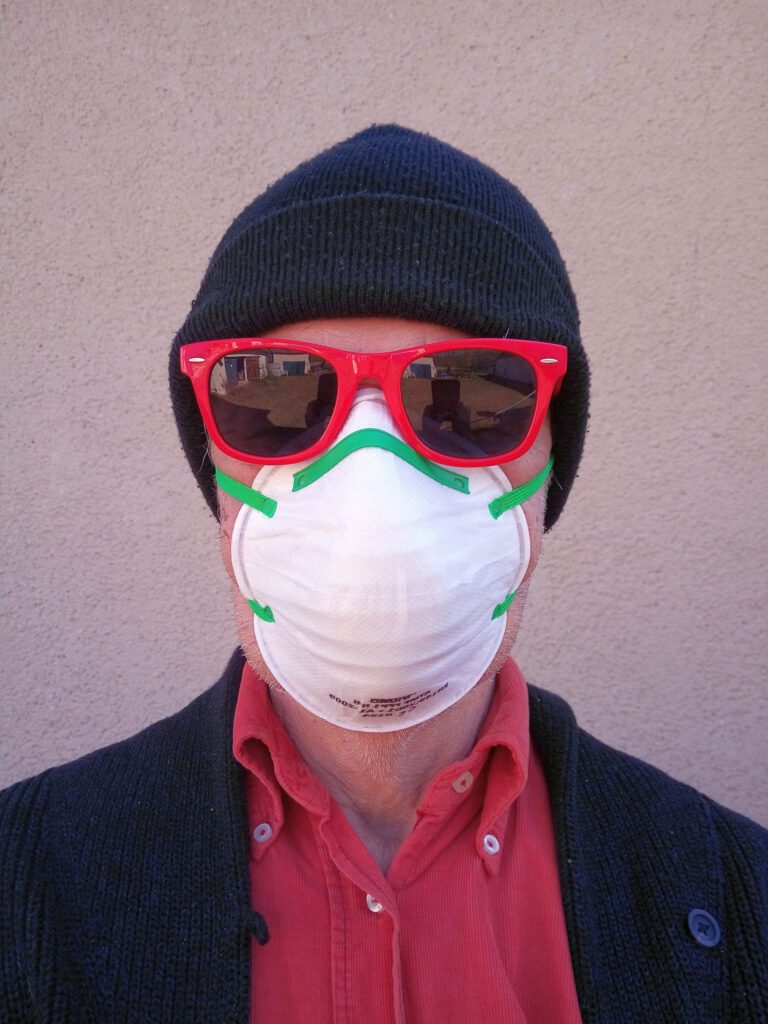
We need universal mask wearing to lower the virality of COVID-19. The mask protects others and ourselves. In addition to physical, not social, distance and hand washing.
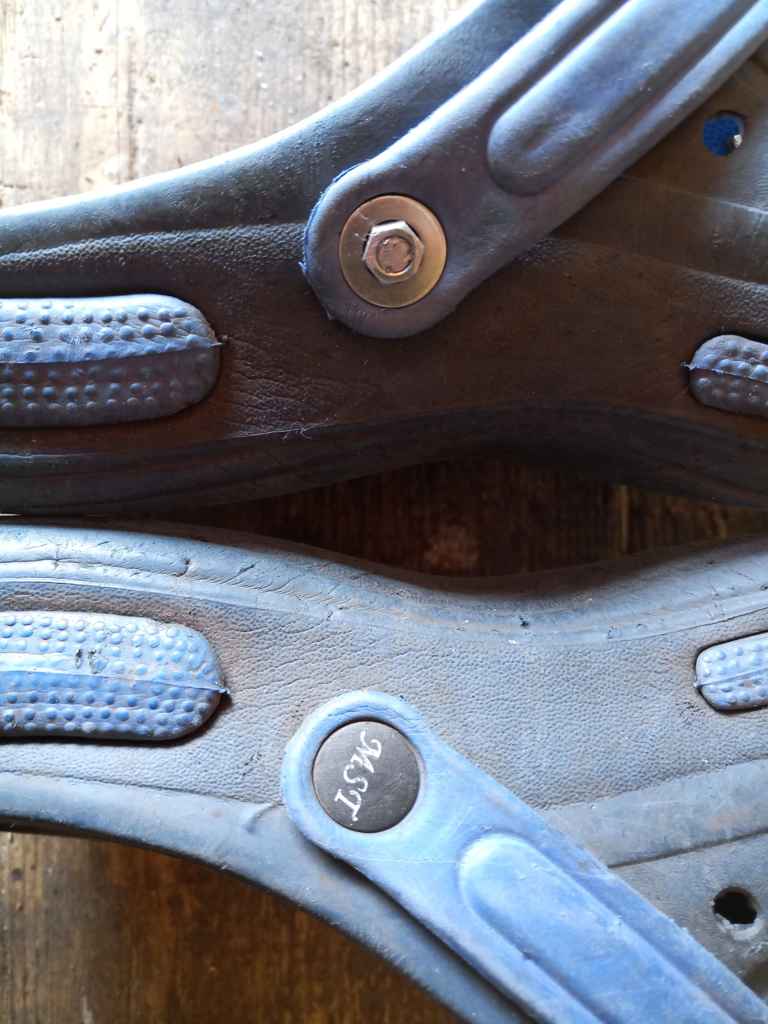
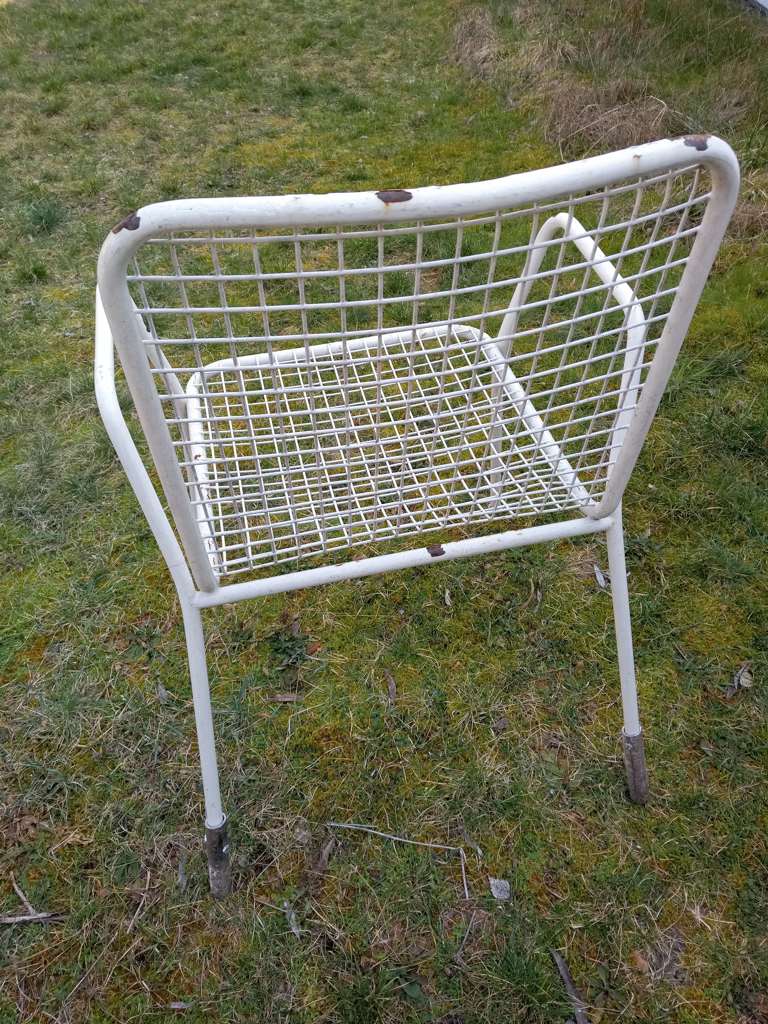
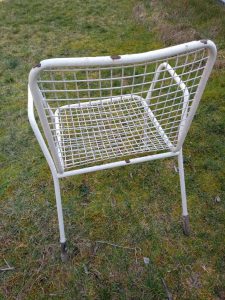
Because the water collected in the rubber feet, two feet of the old metal garden chairs rusted off. A built in wear. The designer should have just made holes in the plastic caps for water drainage.
In order to save the chair, I extended…
New feet rear
the legs with pieces of the old water pipe. The chair still needs painting. That way he can live a long time.